Every farmer’s grievance/ crop failure is a wound the nation must feel. The ongoing review of Paraquat Dichloride and Glyphosate, prompted by the reports of severe poisoning in Telangana, deserves both compassion and clear and rational scientific reasoning. While poisoning and death due to lapses needs investigation and solution, the policy response must strike at the real cause of harm and not on the mishap without studying the issue. Removing a molecule that had undergone rigorous scrutiny from the shelf may be an act of administration.
However, within itself, it could neither protect the gullible farmer from poisoning nor the crops from losses due to devastating weeds. The challenges are many, but farmers’ livelihood is their fundamental right, and we, the responsible citizens, must stand steadfast for this cause. The evidence on what drives farmer suicides is well established. Indebtedness, crop failure due to counterfeit and substandard agricultural inputs, lack of timely institutional credit, and poor price realization arising from inefficient marketing systems are among the principal factors that push distressed farmers to the brink, and not the chemistry printed on a pesticide label.
Advertisement
Withdrawing a registered crop protection product does not eliminate debt, restore a failed crop or ensure remunerative prices. Where pesticides are misused for self-harm, the focus must be on identifying and supporting individuals experiencing severe emotional or financial distress. In this regard, the Government’s initiative of introducing a toll-free helpline for counselling and mental health support is a welcome and commendable step.
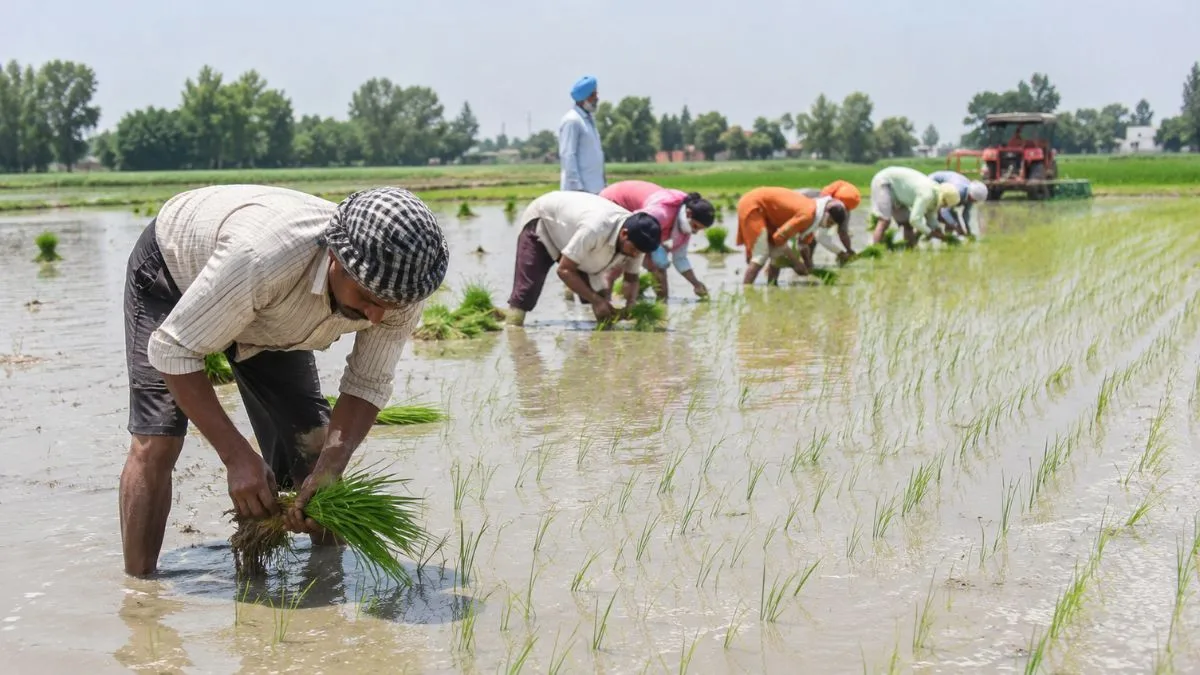
However, if a person is determined to take an extreme step, there are many means available. Therefore, policy interventions should focus on addressing the underlying socio-economic causes rather than restricting essential agricultural tools that millions of farmers depend upon. Herbicides and other crop protection products are indispensable to modern agriculture, particularly for small and marginal farmers, as they provide an affordable and effective means of protecting crops, managing labour shortages and improving productivity.
Stakeholders of crop protection have consistently promoted the right product, at the right dose, at the right time and in the right manner, strictly in accordance with the recommendations provided on product labels and leaflets. However, their capacity to reach every farmer is limited. Farmer education and awareness are ultimately a public responsibility and require sustained governmental support.
It is pertinent to recall the observation of a former Union Finance Minister that several extension experiments have been undertaken over the years, but none has been sufficiently effective in reaching farmers at scale. Today, government is investing thousands of crores of rupees in nationwide campaigns to create awareness about cybercrime. Unfortunately, despite its critical importance, agricultural extension has not received the priority it deserves, given that nearly half of India’s population is directly or indirectly dependent on agriculture.
Should there not be an equally intensive national campaign to educate farmers on scientific crop management, balanced use of fertilizers, safe and judicious use of crop protection products, and the identification of counterfeit agricultural inputs? The Government deserves appreciation for promoting crop insurance through substantial premium support. At the same time, scientifically evaluated crop protection chemicals themselves act as the first line of defence against pests, diseases and weeds, helping farmers avoid crop losses before insurance becomes necessary.
When used strictly according to label recommendations, these products have repeatedly been demonstrated to be safe and effective through thousands of scientific studies conducted worldwide. It is important to remember that no crop protection product is approved for use in India unless it undergoes rigorous scientific evaluation, extensive toxicological and environmental studies, and scrutiny by the Ministry of Agriculture & Farmers Welfare through the Central Insecticides Board & Registration Committee (CIBRC). Only after satisfying these stringent regulatory requirements is a product registered, following which State Governments issue manufacturing and sale licences.
The real challenge, therefore, is not the availability of registered products, but ensuring their responsible use while simultaneously eliminating counterfeit and illegally smuggled pesticides from the market. Biotic stresses, particularly weeds and pests, inflict an estimated annual economic loss of approximately Rs 92,000 crore on Indian agriculture. A comprehensive assessment by ICAR’s Directorate of Weed Research and the Federation of Seed Industry of India, encompassing thousands of farmers across eleven states, estimated potential yield losses due to weeds at 25-26 per cent in kharif crops and 18-25 per cent in rabi crops. These findings emphasize that timely and effective weed management is fundamental to sustaining crop yields, farm profitability and national food security.
The withdrawal of any scientifically evaluated crop protection molecule without a proven, affordable and equally effective alternative inevitably increases production losses, with the greatest burden falling on smallholder farmers, followed by consumers through higher food prices and ultimately the national economy. At a time when India is strengthening food security and advancing the vision of Atmanirbhar Bharat, ensuring continued access to effective crop protection tools under a robust regulatory framework is imperative.
Paraquat is not a product of convenience; it is a tool of necessity in the circumstances. It has been used in India even before the inception of the Insecticides Act, 1968 without any undue concerns arising because of its use in agriculture and non-cropped areas. As a fast-acting, non-selective contact herbicide, it gets deactivated the instant it touches the soil, leaving no residue in the field or in the harvest. By virtue of this property, paraquat dichloride has become the basis of the zero-tillage and conservation agriculture that the Government itself is promoting to conserve water and protect soil health.
It is heavily relied upon for cultivation across the agro-ecological niches including horticultural, field and plantation crops. It is enigmatic why suddenly news highlighting the hazardous nature of paraquat dichloride has surfaced disproportionately in the country to coincide with the arrival of kharif sowing. With the onset of monsoon, the demand for discontinuation of this herbicide becomes all the more important.
For more than three decades, successive expert committees constituted by the Government of India have consistently recognized that Paraquat Dichloride is an effective non-selective contact herbicide with an important role in weed management, while simultaneously acknowledging its acute toxicity if misused or ingested. Importantly, none of the major Government- appointed expert committees ~ the Banerjee Committee (1991), the R.B. Singh Committee (1998), the C.D. Mayee Committee (2006) and the Dr. Anupam Verma Committee (2015) ~ recommended an outright ban on Paraquat Dichloride.
Instead, each committee concluded that the risks associated with the herbicide could be managed through a robust regulatory framework comprising restricted and label-compliant use, strengthened packaging and labelling, controlled sale and distribution, mandatory use of personal protective equipment, user education and stewardship, and enhanced preparedness of the medical community for prompt diagnosis and management of poisoning cases. The Anupam Verma Committee’s recommendations were subsequently considered and accepted, with observations, by the Registration Committee in its 361st Special Meeting (22 December 2015), which supported the continued registration of Paraquat with additional safeguards rather than prohibition.
This regulatory approach is consistent with the internationally accepted principle that pesticide regulation should be based on scientific risk assessment rather than hazard alone, recognizing that hazard is an intrinsic property whereas risk depends on the magnitude and route of exposure under approved conditions of use. Deliberate self-poisoning and accidental ingestion are serious public health concerns that warrant strengthened stewardship, packaging innovations, poison information services, farmer training and medical preparedness; however, these concerns do not, by themselves, demonstrate unacceptable risk from registered agricultural use when products are handled in accordance with approved label directions.
Consequently, the cumulative scientific and regulatory opinion of successive Government expert committees has consistently favoured risk mitigation and responsible stewardship over prohibition, supporting the continued availability of Paraquat Dichloride within a stringent regulatory and safety framework while ensuring its agronomic benefits for effective weed management. Glyphosate is another effective and non-selective herbicide that periodically faces opposition from some quarters for unknown reasons. The herbicide, with 0.7-0.9 million ton usage, remains one of the most extensively evaluated and widely used broad-spectrum herbicides in the world.
In India it plays a critical role in effective weed management, conservation agriculture and sustainable crop production. Any call for its prohibition should be guided by robust scientific risk assessment rather than hazard perception alone. Technical glyphosate exhibits low acute toxicity, with an oral LD50 exceeding 5,000 mg/kg body weight, which is higher than that of even common salt, indicating comparatively lower acute toxicity. While the International Agency for Research on Cancer (IARC) classified glyphosate as a potential hazard, major regulatory authorities, including the Joint FAO/WHO Meeting on Pesticide Residues (JMPR), the European Food Safety Authority (EFSA), the European Chemicals Agency (ECHA), the United States Environmental Protection Agency (US EPA) and other bodies have concluded that glyphosate is unlikely to pose a carcinogenic risk to humans when used according to approved label directions.
Consistent with this scientific evidence, the European Union renewed glyphosate approval until 2033. In India, withdrawing glyphosate would eliminate a highly effective non-selective herbicide, reduce options for resistance management, increase dependence on less efficient or costlier alternatives and adversely affect conservation agriculture. Continued use under strict regulatory oversight, stewardship, label compliance and user training represents a scientifically justified and proportionate approach that balances agricultural productivity with human and environmental safety.
A regulatory regime that bends to the headline will, in time, forfeit the trust of the farmers it is meant to serve. The timing is equally critical. With the kharif season underway, farmers have already planned their crops, secured credit and procured inputs based on the expectation that registered products will remain available. Abrupt withdrawal of herbicides or insecticides at this stage would disrupt weed and pest management, increase cultivation costs, create uncertainty and jeopardize productivity. Regulatory decisions should therefore be guided by sound scientific evidence and accompanied by a phased transition supported by effective alternatives, rather than sudden prohibition.
This is a humble appeal to the Government ~ not for regulatory relaxation, but for a science-based and balanced approach that harmonizes agricultural productivity with environmental sustainability. The current regulatory status of Paraquat Dichloride and Glyphosate should be maintained until the ongoing scientific review is completed through the established statutory process.
Simultaneously, greater emphasis should be placed on responsible stewardship through farmer training, Good Agricultural Practices (GAP), improved packaging and labelling, closed-transfer systems where appropriate, and strengthened regulations governing sale, storage and safe handling. This is the approach adopted by most agricultural economies to balance crop productivity with human and environmental safety. Indian farmers deserve both effective crop protection technologies and the highest standards of safety, and sound public policy should strive to secure both rather than compromise either.
(The writer is former Agriculture Commissioner, Government of India)